Autumn Animal Habits – How Nature Prepares for Winter?
Autumn Animal Habits – How Nature Prepares for Winter?
October in the mountains means autumn in full swing – the snow-covered ridge of the Tatra Mountains, falling colourful leaves, and cool days quickly giving way to cold nights are clear signs of the winter that will arrive in the coming weeks. Nature has to prepare for this winter if it wants to survive and make it to the next spring. During autumn, both plants and animals clearly change their appearance and behaviour, and for several weeks we can admire these colourful spectacles.
Autumn at the Tatra Educational Park
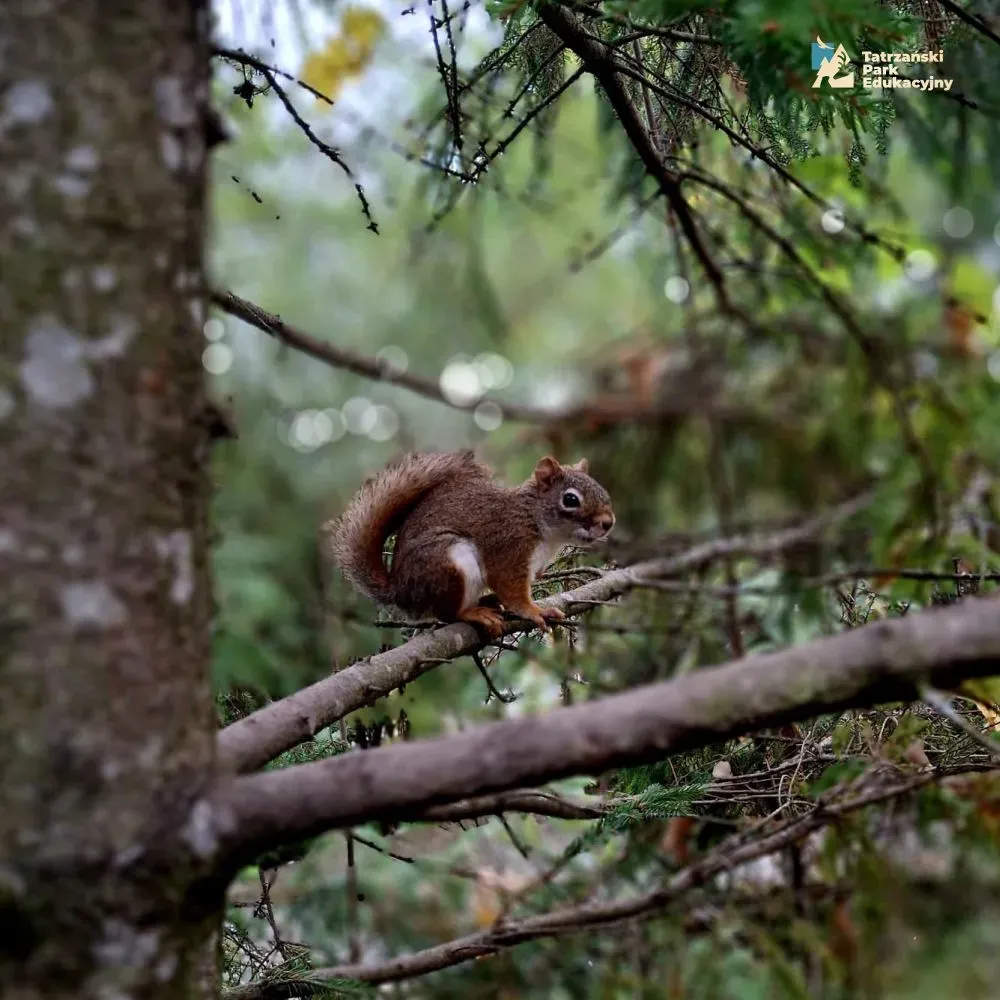
At this time of year, when the Park becomes quieter and calmer, we often stop for a moment to observe our animals. The foxes are gradually growing their thick winter coats, and we can see the same winter changes appearing in our deer. Squirrels are showing up more and more often by the food bowls and eagerly eating seeds, while some grab nuts in their teeth and carry them off to their hiding places. From early morning, sparrows, finches and tits are busy around the feeders. Over the past few weeks, the marmots have been intensively carrying hay into their underground burrows, blocking up tunnels, and they have now stopped coming out to the surface because their hibernation is beginning. Our cats, which in summer can spend hours wandering around the Park and the forest, now spend much of the day indoors, most often dozing on someone’s lap and regularly checking their food bowls. Everyone is getting ready for winter. For many animals, this is an extremely difficult time, when low temperatures, limited access to food and deep snow can become a serious challenge. Nature, however, has equipped them with ingenious mechanisms that help them survive this period.
Stocking Up for Harder Times
One of these mechanisms is storing food and creating food reserves. This behaviour is mainly practised by rodents, insectivorous animals such as moles, some birds, and honey bees. Small rodents such as squirrels, mice, voles and hamsters store large amounts of seeds, nuts, acorns and grains in their burrows or bury them in the ground. Beavers also create food reserves in the form of branches, bark and tree shoots, storing them underwater close to their lodges. Moles, on the other hand, create unusual food stores. They carry earthworms into burrows dug deep underground after slightly damaging their nervous systems, which prevents them from escaping but allows them to stay alive and therefore remain fresh. Among birds, food storage is practised by species such as corvids, including jays and nutcrackers, as well as woodpeckers and tits. They hide seeds, for example sunflower or pine seeds, insects and acorns, placing them in cracks in tree bark or burying them in the ground and forest litter. As for honey bees, before winter the worker bees store honey and bee bread – processed pollen – inside the hive. These supplies will provide food for the entire colony.
Changing the Winter Menu
Animals that remain active during winter and do not store food are often forced to change their diet and rely on food that is easier to find. Species that eat insects during spring and summer begin feeding on seeds instead – this is common among birds such as woodpeckers. Carnivorous animals, meanwhile, may more often choose to feed on carrion instead of hunting, as it can be easier to find.
Winter Coats
Another very useful strategy for surviving winter conditions is changing from a summer coat to a winter one. The winter coat is often longer and thicker, which provides better protection from cold and moisture. It also usually has a different colour, helping the animal to camouflage itself in the winter landscape.
Sleeping Instead of Fighting Winter
Other animals choose a completely different strategy for surviving winter and go into a state of sleep or dormancy. This behaviour is observed in most invertebrates, amphibians, reptiles and some mammals. Before winter arrives, these animals build up energy reserves in the form of body fat and prepare a special place that will keep them safe over the following months. When they fall asleep, their bodies enter an energy-saving mode and their activity is significantly reduced. Body temperature drops, and both breathing and heart rate slow down. Depending on the species, the depth of this sleep varies. Some animals sleep continuously for many weeks, while others wake up regularly and become active for short periods.
Hibernation
A particularly interesting form of winter sleep is hibernation. The entire metabolism of a hibernating animal slows down significantly, the digestive system becomes inactive, and body temperature can be as much as 30 degrees lower than during the active season. Animals in a state of hibernation wake up only very rarely, if at all, because waking is extremely energy-consuming for the body. Animals that hibernate include, among others, amphibians, reptiles, dormice, European hamsters, hedgehogs, bats and marmots.
Diapause
There is another form of winter dormancy known as diapause. This strategy is used mainly by invertebrates, especially insects. In this state, growth and development are completely suspended, and the organism moves on to the next stage of development only after waking.
Escaping Winter
Many bird species do not use any of the strategies described above because they do not experience winter at all. Instead, several weeks before it begins, they leave their current habitats and migrate to warmer regions, often hundreds or even thousands of kilometres away. Migratory birds include, among others, storks, orioles, nightingales and swallows. On the other hand, there are also species that come to Poland for the winter, such as waxwings, bullfinches and tits. Migrating birds spend several weeks in flight, so before setting off they feed intensively in order to build up enough fuel in the form of body fat, which they need for the journey.
Not So Different from Humans
In many ways, wild animals are quite similar to us. When it gets cold, we take warmer clothes out of the wardrobe, and in autumn we fill the shelves of our pantries with various preserves. Some people travel to tropical destinations so they can warm themselves in the sunshine, while others significantly reduce their activity and spend more time under a blanket with a cup of hot tea. All of this happens so that we can get through the cold season as comfortably and painlessly as possible while waiting for spring to arrive.