Rosebay willowherb – when nature puts on rose-colored glasses...
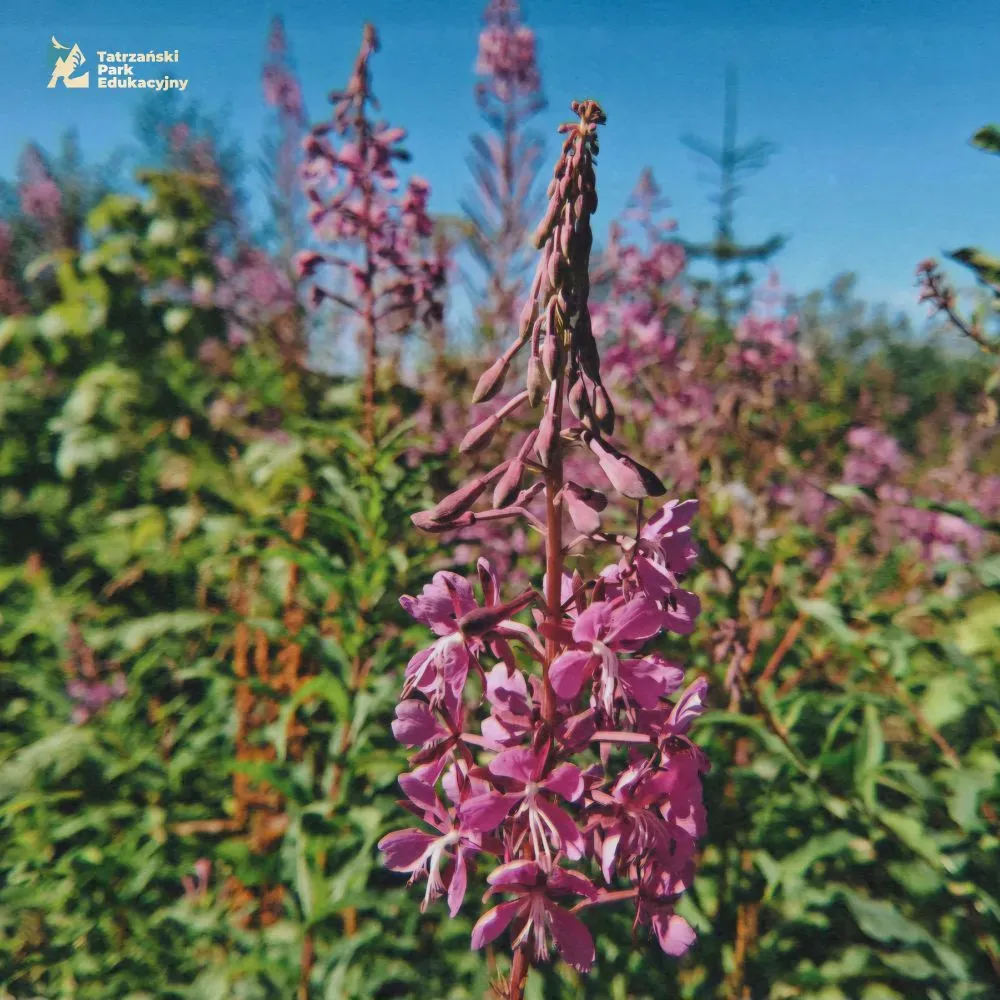
A spectacle! That is probably the best way to describe the flowering season of rosebay willowherb in the Tatra Mountains. Crowds of tourists come to admire this colourful show… but apart from creating spectacular carpets of pink, purple and light violet, can willowherb surprise us in any other way?
Of course!
In the Tatras, rosebay willowherb begins its performance at the turn of July and August, and this is when its pink carpets can be admired in places such as Hala Gąsienicowa, Rusinowa Polana or Hala Kondratowa. At higher elevations, it can still be found until the end of August and sometimes even in early September. It is worth remembering, however, that this plant grows throughout Poland. Outside the Tatras, it can be seen along forest edges, roadsides and on burnt areas, where it is able to spread very quickly. It also blooms beautifully on the Slovak side of the Tatras, so during a summer trip to places such as Sliezsky Dom or Popradské Pleso, you are likely to encounter large clusters of it along the trails and across green mountain slopes. Willowherb is a perennial plant, resistant to cold and highly expansive, which means its presence is a constant, annual pleasure for our eyes.
This exceptionally beautiful plant has been, and still is, used in herbal medicine. Many people forget about the health-related properties traditionally attributed to willowherb. According to folk knowledge passed down through generations, this pink heroine of mountain meadows may have a beneficial effect on, among other things, the urinary system. An infusion made from its flowers and herb is traditionally used for its diuretic properties and to support the body’s natural cleansing processes. Its soothing effect on frayed nerves is also often mentioned, while an infusion applied to irritated skin has traditionally been used to help ease inflammation. Willowherb has also been used for digestive problems and indigestion and is known in folk medicine for helping to relieve diarrhoea. Of course, as with any medicinal preparation, it is important to learn about its proper use and, ideally, consult a doctor or someone with specialist knowledge of herbal medicine before using it.
Rosebay willowherb is also used to make a fermented herbal tea known as Ivan Chai. Traditionally, this drink is valued for its calming properties and is associated with easier sleep, stress relief and relaxation. It is also consumed to support digestion and general well-being. Ivan Chai contains various naturally occurring compounds and nutrients, which is another reason why willowherb is regarded not only as a beautiful plant, but also as an exceptionally interesting and useful one.
Finally, it is worth mentioning the symbolic meaning of rosebay willowherb. In Poland, one of its most common associations is connected with the time of its flowering: it announces the approaching end of the mountain summer. But, as we already know, willowherb readily grows on burnt ground, which leads us to another symbol – rebirth and survival. In this sense, willowherb is a plant that reminds us that life can bloom again… even from the ashes. Continuing its connection with the element of fire, there is also an old belief that rosebay willowherb represents the soul of a tree that was burned after being struck by lightning.
To sum up, rosebay willowherb is a plant that surprises us not only with its beauty and colours, but also with its traditional uses and rich symbolism. From now on, meadows covered in pink flowers may evoke not only aesthetic and fairy-tale associations, but perhaps even those of an old-fashioned herbal apothecary. All of this is yet another reminder that nature can be a form of medicine – both literally, through plants traditionally used to support the body, and figuratively, through its ability to calm the mind, ease tension and positively influence our well-being.